Showing posts with label phalaenopsis bellina. Show all posts

Wednesday, July 28, 2010

My “wild” bellina

Phalaenopsis_bellina

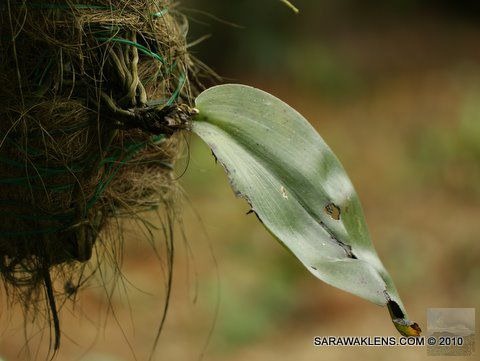
Walking around my wild backyard, I discovered a flower on the Phalaenopsis bellina I tagged to this Syzygium malaccense tree about two years ago! The bug/snail eaten flower smells great, like all bellina flowers do and I hope it gets pollinated naturally.


Sadly, between the time I first tagged it to the tree until its first flower, the tree’s been badly damaged by borers and termites and is slowly dying. Most of its branches have dried up and broken off. It’s a sad sight indeed as this tree has been around for as long as I could remember.


dying_tree 

Borers and termites are a constant menace but I keep them away from the orchid house by spraying Malathion or similar pesticides. I really do not like using chemicals but will have to take drastic action asap because the termites are now attacking the big mango tree on the right.


Phalaenopsis_bellina_on_tree

I tagged 4-5 plants to this tree but only 2 survived to this day (no flowers from the other one yet). Got inspired to do so when I saw a friend’s tree full of P. bellina plants which look like they had naturally colonized it. Coincidentally, his tree is also a Syzygium species. When I visited him a couple years ago, I saw baby bellinas that had apparently germinated naturally in the moss on the tree bark. Amazing sight!

Monday, January 25, 2010

After the rains…


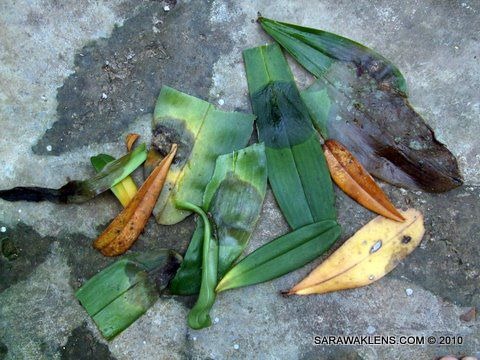
orchid_leaf_rot

Cut and collected leaves affected by rot due to continuous days of rain this month (January).

Assessing the damage.


Affected with leaf rot but otherwise healthy -

1. Phalaenopsis bellina 6 plants

2. Phalaenopsis cornu cervi 3 plants

3. Phalaenopsis amabilis 1 big mother plant


Affected with leaf and crown rot, may be alright if kept dry -

1. Aranda Broga Giant 1 big plant

2. 2 Trichoglottis species – 3 plants


Affected with leaf and bulb rot -

1. Coelogyne dayana – 1 big pot

2. Coelogyne motleyi – 1 big clump


Affected with crown and stem rot, slim to no hope -

1. Rhyncostylis gigantea (peach) 1 blooming size plant


phalaenopsis_leaf_rot 


Every rainy season it is like this. Last year I tried placing plastic sheets above the plants but the sheets soon formed pockets that became breeding grounds for mozzies. The plants too became very dry because dew could not form on them at night and in the early mornings. I had to water them with a garden hose and this brought back the rot problems.


The plastic sheets have been removed and I now do what a good friend and fellow orchid grower does, let the plants go wild! Click here to see his “wild” collection. I just check every for rot problems and remove affected leaves.


Plants at an orchid garden in Kuching also suffer from rot problems as these pictures tell (taken recently):

coelogyne_asperata_rot

This used to be a monster clump of Coelogyne asperata!


coelogyne_pandurata_rot (2)

What used to be very healthy Coelogyne pandurata plants.


coelogyne_pandurata_rot

And this used to be part of a very large and healthy Coelogyne pandurata display.


Phalaenopsis_bellina_rot (2)

The Phalaenopsis bellina plants here are also badly affected by the wet weather (and snails!).


Phalaenopsis_bellina_rot

I saw many plants removed from their mounts and planted in pots kept in a sheltered area. Hopefully this one survives. My friend whose garden is pictured here (click) told me his plants suffer the same problems but the short phal stems often survive and put out new growths or keikis after a few months. He doesn’t do much work with his plants anymore as he has given up trying to fight nature. He has a big tree full of naturalized bellinas, an amazing thing to see!

Monday, November 16, 2009

Video: Phalaenopsis bellina and fruit flies

This is a video I made some time ago but I don’t think I ever posted it to my blog.


I used to think that the fruit flies harmed the flowers by stinging them. But I don’t think they do any real damage, I’ve come to realize that the flowers are often spoiled or damaged by tiny little snails and slugs instead. (Refer this post: http://www.sarawaklens.com/2009/06/snails-and-not-fruit-flies.html).

Monday, August 18, 2008

Phal bellina and dealing with bothersome fruit flies!

Phalaenopsis bellina. I just love this species. The plants are almost always constantly in bloom, one flower after another. Sometimes, they put on a really beautiful display with several flowers opened at a time:


The fragrance attracts a lot of fruit flies:


Sometimes they knock off the pollen cap without pollinating the flower, causing the flower to wither and drop off in a few days. I would also have no way of being 100% sure if the pollen was from the same flower, plant or a different phal species altogether when the pod starts to develop after insect pollination. The biggest problem I have with these fruit flies is that I always find pock marks and sting marks on the flowers and leaves if they are not dealt with quickly. I am certain other insects such as grasshoppers and beetles are just as guilty for damaging the orchids but these fruit flies are a real nuisance! They also pollinate my bulbo macranthum flowers before I even have a chance to enjoy them. They also sting our guavas and gourds, passion fruit and tomatoes.

So to deal with these buggers, here's what I do:

1. Try and catch them by hand. Usually they are so engrossed with the flowers they do not see my finger and thumb approaching before it's too late. Having caught a few, I'd feed them to my CPs (carnivorous plants) such as my Venus fly traps and Sarracenias.

My S. flava. A tasty fruit fly every now and then does them good.

Now you see it...


Now you don't!


2. The most effective way of controlling fruit flies is by setting up a fruit fly trap utilizing methyl eugenol as an attractant. First, find a mineral water bottle and make small holes big enough for the flies to crawl through on the top half. Then, fill it with water and place a small piece of sponge dabbed with methyl eugenol in it. Hang this trap among your plants.


Within moments, the flies move in!


They crawl through the holes at the top...


And subsequently drown in the water as they fly around trying to find a way out and knock into the slippery wall inside the bottle.


I took these pictures this morning. I walked away for about ten minutes and came back to find more flies than I could count drowning in the water! Very effective huh? I read somewhere that methyl eugenol attracts the male flies, and when the male flies are destroyed, the population quickly drops as the females are no longer able to breed. In my experience, the sponge needs to be re-dabbed with methy eugenol every few months.

I also made a short video (mp4) that shows the flies and the trap. If you are unable to view mp4 files, a low quality vid is available on my Flickr page here.
Related Posts Plugin for WordPress, Blogger...