Now and then it's good to go out with a different crowd and learn something new. Earlier this week I went with two ichthyologists from the Natural History Museum of London to look for black water fish species in peat swamps (they have all relevant papers and permits in case you’re wondering). They did all the looking, catching, and bagging, getting wet and dirty while I stayed dry and just snapped photos. :)
It also gave me an opportunity to snap photos of wild orchids and other flora found in the swamps.
The two day trip opened my eyes to a different world and field. As a kid I used to catch fish for my small aquariums such as rasboras and barbs but I never knew there were freshwater puffers, leaf fish and other types of carnivorous fish in our small black water streams! These unique species are now greatly threatened by habitat destruction, development and agricultural wastes.
Being already familiar with Latin names and scientific names of plant species, learning the names of fish species I've always taken for granted wasn't difficult. The three types that I was most fascinated with were the black water puffer, Carinotetraodon salivator, a small thumb-sized puffer as cute as a button; a species of leaf fish, (Nandus sp.); and a two spot rasbora, Rasbora kalachroma, a beautiful species I've never caught or seen before.
Certainly piqued my interest to learn more about our freshwater species, especially those found in peat swamps and black water streams.
Oh and we had a fair bit of drama on day 1, when our rented 4wd got stuck in the soft peat in one of the areas we visited. But that's a story that deserves its own entry. ;)

This is the only picture I have of the two of them in the same frame. Pretty brave to go in like that, who knows what’s lurking in the water!
“Are there are crocodiles in here??”
“We’ll find out soon!”

Before heading to the swamps, we made a quick stop at the fish market. Pictured here are three different species of anchovies. According to my new fish friends, the middle one is a Setipinna species while the other two are Coilia species.

An unidentified fish which looks like a goby. Apparently this was a stray catch and no one wanted to buy it so the fish monger gave it to the scientists for free.
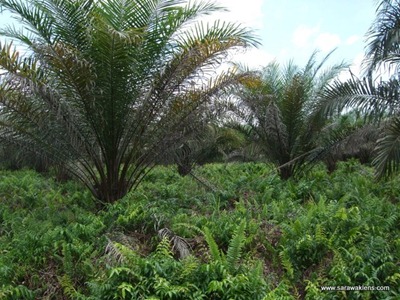
Our next stop was a destroyed peat swamp. The original trees have been cleared and replaced by the African oil palm. It’s an intrusive monoculture that is rapidly taking over Borneo and drying up vast areas of land, swamps and wreaking havoc to the eco system. Like all other monocultures, the tree itself isn't evil and the oil it produces isn't that bad either (don't believe all the negative propaganda designed to protect another set of economic interests), it is HUMAN GREED that's destroying our world.

Rasbora kalachroma

Luciocephalus sp. , a small black water pikehead often found in peat swamps. It is a predatory species.

“Sigh, not much luck here…”

So we decided to move further in. Because we had too much stuff in the car, we decided to drive in instead of walking. BIG MISTAKE! The soft peat soil quickly trapped our 4WD and we spent about 3-4 hours stuck in there until my good friends drove all the way from the city to rescue us! We were also helped by two good Samaritans. A friend in need is a friend indeed! It was a bit too much adventure for one day and a story that shall be told in a separate entry. :)

Back from the swamps and watching their peers on TV, a National Geographic program featuring the Congo.

Day 2, we started early and headed to a different location. After driving around for about an hour, we finally located a small black water stream. This find set the adrenaline going again and the scientists quickly changed into their mucking gear and jumped in without hesitation. I, of course, stayed perfectly dry snapping away with my two cameras. There were lots of orchids to be photographed by the stream and I wasn’t going to waste any time! Something for everyone!

Tannins from decomposing organic matter stain the water and give it a near black color.
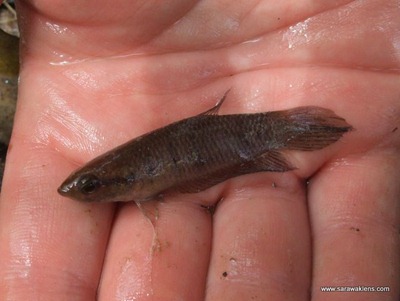
First big find! A beautiful betta species, wild fighting fish. From this find onwards, they knew they had struck gold. More exotic fish species were to be found. Only one eluded the scientists’ nets that day, the tiny Paedocypris species, one of the smallest fish in the world measuring only about 1cm in length fully grown.

Betta sp.

A small loach.

Small fresh water crab.
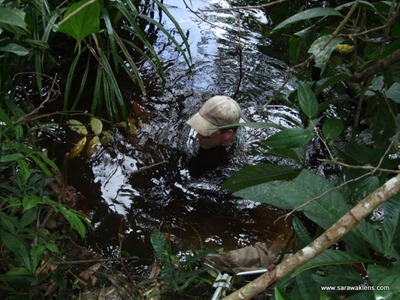
Luck was not on his side that day. Not only did too much sand get into his extendable net tube, causing it to jam up, he kept losing his shoes which easily got stuck in the clay and sand in the riverbed.

Baby catfish. This species has a large gaping mouth, just imagine what a formidable predator it will become when fully grown!

Besides bettas, half beaks and rasboras of all sizes were also caught.

This isn’t even the deepest part. There was a part where the water came up to his chest.

This cute little thumb-sized puffer is believed to be Carinotetraodon salivator.
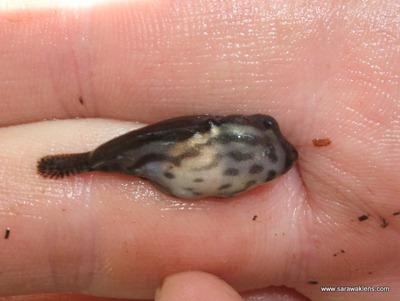
Another shot of the tiny little black water puffer.

A leaf fish, Nandus species. I never knew they existed in our waters! So naturally, I was all oohs and aahs!

A betta and rasbora, collected for scientific research.
It was a fun outing and I look forward to more adventures where I get the opportunity to learn and discover new stuff!


