Showing posts with label phalaenopsis. Show all posts

Saturday, May 7, 2011

'Wild' Phalaenopsis bellina


'Wild' Phalaenopsis bellina. Don't get too excited though, I didn't stumble upon a wild colony of rare orchids in the jungle. These are all photographed in my backyard haha.

These tree mounted ones are so much healthier than the ones I have in pots or tree fern mounts which are constantly under attack from snails, mites and other pests.


Wednesday, July 28, 2010

My “wild” bellina

Phalaenopsis_bellina

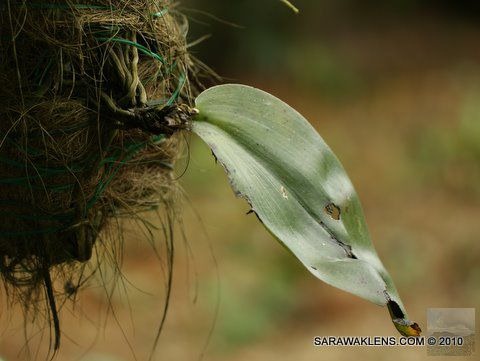
Walking around my wild backyard, I discovered a flower on the Phalaenopsis bellina I tagged to this Syzygium malaccense tree about two years ago! The bug/snail eaten flower smells great, like all bellina flowers do and I hope it gets pollinated naturally.


Sadly, between the time I first tagged it to the tree until its first flower, the tree’s been badly damaged by borers and termites and is slowly dying. Most of its branches have dried up and broken off. It’s a sad sight indeed as this tree has been around for as long as I could remember.


dying_tree 

Borers and termites are a constant menace but I keep them away from the orchid house by spraying Malathion or similar pesticides. I really do not like using chemicals but will have to take drastic action asap because the termites are now attacking the big mango tree on the right.


Phalaenopsis_bellina_on_tree

I tagged 4-5 plants to this tree but only 2 survived to this day (no flowers from the other one yet). Got inspired to do so when I saw a friend’s tree full of P. bellina plants which look like they had naturally colonized it. Coincidentally, his tree is also a Syzygium species. When I visited him a couple years ago, I saw baby bellinas that had apparently germinated naturally in the moss on the tree bark. Amazing sight!

Friday, April 16, 2010

Severe spider mite infestation

Phalaenopsis_orchids_spider_mites_2

The aftermath of a spider mite infestation.


Spent the entire evening salvaging whatever's left of my once very healthy orchid seedlings, many of which have reached blooming size. In fact, many have already started to bloom. I do not know for sure where the mites came from. Perhaps it's from the goat pellets (any of my fellow growers have any bad experiences with spider mites after using natural goat pellets?) or from an affected plant with dormant eggs introduced from elsewhere.


The damage is severe. I lost some very expensive primary hybrids such as Phalaenopsis gigantea x P. bellina (which were growing handsomely!), P. cornu cervi and P. pantherina primary hybrids and many more. Along with the phals, I also lost countless slipper orchids, I do not wish to even start counting as it's too heart breaking. Many of my large vanda seedlings are also affected, but vandas are hardy plants and the stricken plants should come back nice and healthy after some months. I do not hold much hope for many of the phals and paphs. :(


I soaked all the plants in the nursery area for 10-15 seconds in a natural/organic mite killer by Yates called Natrasoap. Anyone familiar with this? Hope it does the trick in eliminating those nasty microscopic parasites! 
I know that spider mites hate water, and since the nursery area is sheltered from the rain, perhaps this is why the infestation could spread like wildfire.  

Total damage? I don't even want to come up with an estimated figure. I refuse too. Too painful to even think about.  *sigh*


Two pictures are included here, the first one was taken this evening, showing the terrible damage done. Who knew such minute creatures could wreak so much havoc.


Phalaenopsis_orchids_spider_mites_1

The second photo above was taken in January, showing the green and healthy seedlings, some coming into bloom.


When I first spotted the mite infestation, I sprayed the plants with pesticide, wrong thing to do, I know. But it’s hard to find miticides here. Plus, I really do not like to use any sort of poisonous chemicals on my plants. So I then resorted to only water, spraying the plants hoping to dislodge the mites and destroying any eggs. The mite problem seemed to be settled but soon came back. The recovering phals which were putting out new shoots were quickly overwhelmed and many dried up and died.


I have tried using neem oil and a mild soap solution before. Didn’t work too well to keep the bugs away. Some friends swear by it, but I haven’t had much success with it. I’ve also tried serai wangi (lemon grass extract), can’t say for sure if it works.


For now, I'm going to shift all of the seedlings outside, if they survive, they survive. If they don't, I'll have to cut my losses. I don't want to stress over them too much anymore. 

Saturday, April 10, 2010

Phalaenopsis corningiana

Phalaenopsis_corningiana

Nearly missed this one as it’s hidden by the large leaves of the mother plant. Just one single bloom is enough to fill the shade house with a wonderful fragrance. Most of my plants bloom once year and always in the month of April. The flower above is the most current bloom but here are some other photos taken from previous years (all bloomed in April).


Phalaenopsis_corningiana_2008

This particular one is not mine but the photo was taken in April 2008.


Phalaenopsis_corningiana3

This one was photographed in April 2009 but the date on the file reads May 09 as my camera was mistakenly set a month forward at the time. Thankfully I keep records of all blooms by month and year.


Phalaenopsis_corningiana2 

Two plants of the same species, but the flowers have very different markings. Photographed in April 2009.


The flowers last for about a month and then it’s another long wait for the next flowering period. I am sure they only bloom in April for me or in my geographic location (depending on the weather or change in weather from wet to dry). A friend in Germany who keeps them indoors says that his plants bloom in the fall.


If only this species bloomed more frequently for me, it'd be my favorite phal because I do not know of any other phal with a fragrance so agreeable!


I have a seed pod about ready to burst which I hope to send off to be flasked in the coming days. Then I’ll have lots of Phalaenopsis corningiana seedlings. The last attempt was not successful as the flasks were contaminated by fungus.


Phalaenopsis_corningiana4

A big and healthy Phalaenopsis plant found in the deep jungles of Borneo.


Today, beautiful and healthy clones are easily found in many nurseries and suppliers throughout the world. Even so, it is extremely important that wild stocks be protected as the gene pool is vast.


Sadly, these beautiful wild orchids are greatly threatened by loss of habitat (plantations and development). Their numbers have also been greatly reduced in the wild by collectors and poachers. Perhaps one day, with greater appreciation for nature and the world around us, we won’t have to depend on botanic gardens or zoos just to see something “wild”.

Monday, January 25, 2010

After the rains…


orchid_leaf_rot

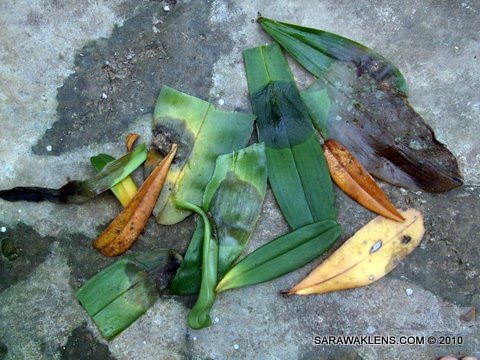
Cut and collected leaves affected by rot due to continuous days of rain this month (January).

Assessing the damage.


Affected with leaf rot but otherwise healthy -

1. Phalaenopsis bellina 6 plants

2. Phalaenopsis cornu cervi 3 plants

3. Phalaenopsis amabilis 1 big mother plant


Affected with leaf and crown rot, may be alright if kept dry -

1. Aranda Broga Giant 1 big plant

2. 2 Trichoglottis species – 3 plants


Affected with leaf and bulb rot -

1. Coelogyne dayana – 1 big pot

2. Coelogyne motleyi – 1 big clump


Affected with crown and stem rot, slim to no hope -

1. Rhyncostylis gigantea (peach) 1 blooming size plant


phalaenopsis_leaf_rot 


Every rainy season it is like this. Last year I tried placing plastic sheets above the plants but the sheets soon formed pockets that became breeding grounds for mozzies. The plants too became very dry because dew could not form on them at night and in the early mornings. I had to water them with a garden hose and this brought back the rot problems.


The plastic sheets have been removed and I now do what a good friend and fellow orchid grower does, let the plants go wild! Click here to see his “wild” collection. I just check every for rot problems and remove affected leaves.


Plants at an orchid garden in Kuching also suffer from rot problems as these pictures tell (taken recently):

coelogyne_asperata_rot

This used to be a monster clump of Coelogyne asperata!


coelogyne_pandurata_rot (2)

What used to be very healthy Coelogyne pandurata plants.


coelogyne_pandurata_rot

And this used to be part of a very large and healthy Coelogyne pandurata display.


Phalaenopsis_bellina_rot (2)

The Phalaenopsis bellina plants here are also badly affected by the wet weather (and snails!).


Phalaenopsis_bellina_rot

I saw many plants removed from their mounts and planted in pots kept in a sheltered area. Hopefully this one survives. My friend whose garden is pictured here (click) told me his plants suffer the same problems but the short phal stems often survive and put out new growths or keikis after a few months. He doesn’t do much work with his plants anymore as he has given up trying to fight nature. He has a big tree full of naturalized bellinas, an amazing thing to see!

Monday, January 18, 2010

Nonstop rain and more snail damage!

While December was relatively dry, January has been quite wet! It’s as if all that December rain was saved up for January and it has been raining nonstop for almost 2 days now. If it’s not a slight drizzle it’s a big downpour! In this kind of weather, snails in the shade house have free reign over my orchids because I can’t sprinkle snail bait without all of it being washed away.


Slugs and snails of all shapes and sizes come out and attack new shoots, leaves and root tips. Big snails, small snails, tiny snails, screw-shaped snails, round snails, transparent snails, only snail missing is a square snail! My phalaenopsis species orchids suffer the most as these pictures tell…


Phalaenopsis_snails_orchid_pests_1

This new leaf would have been a really beautiful shiny broad leaf if it weren’t for those damn tiny monsters!


Phalaenopsis_snails_orchid_pests_2

Reason why many of my species phals do not have perfect foliage.


Phalaenopsis_snails_orchid_pests_3

The older leaves of this Phalaenopsis bellina were damaged by snails when the leaves were still young and just emerging. This is if the bacterial infection doesn’t consume the entire leaf and spread to the crown!


Phalaenopsis_snails_orchid_pests_4

This new leaf on a Phalaenopsis cornu-cervi has also been damaged from the underside. If only I could set up a waterproof time-lapsed camera in the shade house! I’d really like to see how exactly do those buggers create so much damage.


Phalaenopsis_snails_orchid_pests_5

This poor Phalaenopsis corningiana has lost its crown. The rot started from similar damage done to a new emerging leaf like in the first photo above. Thankfully the infected part has dried up and the plant has stabilized. If it remains healthy, it should either put out a new shoot or keiki from the side in a few month’s time. I will then have to be vigilant and prevent snails from damaging the new growth.


Phalaenopsis_snails_orchid_pests_6

This snail is feasting on an infected P. bellina leaf. I showed it no mercy!


Phalaenopsis_snails_orchid_pests_7

Severe leaf rot on a P. bellina leaf. This is usually due to poor air circulation and too much rain! This poor plant lost its crown due to snails and infection several months ago and is just putting out a new keiki. To kill any hiding snails, I was once advised to take entire phal mounts (plants and all) and soak them in a bucket of water added with a a spoonful of salt. I have never done this for fear it may harm the plants as well. Anyone tried that before?


Phalaenopsis_snails_orchid_pests_8

Paphiopedlum stonei. Nice and healthy but look at what’s on that new leaf.


Phalaenopsis_snails_orchid_pests_9

A cone shaped snail and a transparent one that looks like a hybrid between a regular snail and a slug. Paphs do not suffer too much from snails “grazing” on them because their leaves are much thicker and hardier than soft phalaenopsis leaves.


Phalaenopsis_snails_orchid_pests_10

A tiny cone-shaped snail on a Rhyncostylis gigantea leaf.


Phalaenopsis_snails_orchid_pests_11

Too late for this leaf. The damage often start as small spots which quickly turn translucent and infected and spread through the entire leaf. If I fail to remove the affected leaf, the rot may spread to the crown and kill the entire plant.


Phalaenopsis_snails_orchid_pests_12

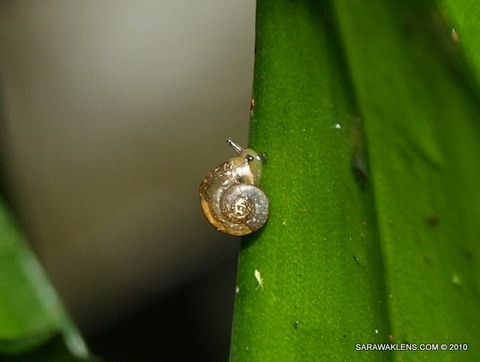
The silhouette of a tiny voracious monster!
 

Phalaenopsis_snails_orchid_pests_13

Tiny monster revealed. These tiny round snails are by far the most numerous from my observations. They are very hard to kill because being so tiny, they often do not run into a snail bait. This one is on an Aerides odorata leaf.
 

Phalaenopsis_snails_orchid_pests_14

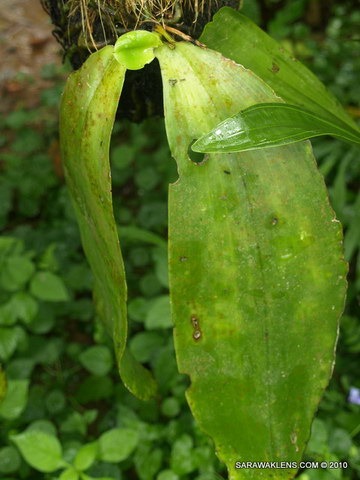
This used to be one of my most beautiful and biggest P. bellina plants. Same story, damaged new leaves, subsequent infection and crown rot. After many months, it has recovered enough to produce a new crown. However, look at what’s hiding under one of the leaves, about to chomp up that juicy succulent new leaf…


Phalaenopsis_snails_orchid_pests_15

A damn snail! Gave it no chance to move any closer to that new leaf before crushing it into goo.


Phalaenopsis_snails_orchid_pests_16

This P. bellina is one of my most cherished plants. That newly opened flower will be damaged overnight if the tiny snails find their way to it.


Phalaenopsis_snails_orchid_pests_17

My Paphiopedilum lowii is not spared from the little monsters. There were several snails in this pot and on the plant!


Phalaenopsis_snails_orchid_pests_20

I have had this Phalaenopsis modesta for more than a year now. It has never had the chance to flourish properly due to constant damage by snails and other pests. I tried moving it to a sheltered area but it protested. I then shifted it to a shady place under a  tree and it seemed happy for a while but then the snails arrived. It has gone from a 5 or 6 leaf plant to a single leaf plant and now it’s starting to make a comeback. I’ll have to keep an eye on it.


Phalaenopsis_snails_orchid_pests_18

And finally, the shocker! Rot and infection that started from seemingly minor snail damage can quickly spread through entire plants and entire mounts. This one had 4 or 5 phals on it. Look at it now…


Phalaenopsis_snails_orchid_pests_19 

And just as the stems, which were still green and healthy, were about to produce new growths, a slug comes along and chomps up the root tips and new shoots! Slugs are hard to kill as they can’t be crushed easily. Easiest way is to sprinkle a bit of salt on them.

Yes, growing orchids is a lot of hard work. One can see why I’ve given up adding more to my collection. However, I have invested a lot of time and $$ into my existing collection so I’m not giving up on them yet!

Friday, January 15, 2010

Bloody snails!

First, a special msg to my visitors from France!

Bonjour amis de France. Bienvenue, merci de visiter mon blog de votre forum. Je sais que vous amour phals, moi aussi, j’aime phals! Mais regardez mes plants et les adultes plantes, ils ont ete attaques par escargots. Les escargots sont d'un pot prises a l'exterieur. Je deteste escargots!

Orchids_snails_phalaenopsis_3

Yesterday evening I had quite a rude shock when I found many of my phal seedlings, big and small, in very bad condition with leaves chomped on by snails. It was still light so I found only one medium sized snail and one small slug, the rest must have been hiding away under pots and in the media.

Orchids_snails_phalaenopsis_6

The damage was pretty bad. Some large ones were eaten right down to the stem. This one, in the above photo, was just recovering from a bad spider mite attack but look at what’s happened to it. From spider mites to snails, my poor phals!

So last night, after a heavy rain, I opened a packet of snail poison and placed the granules all around the pots, in the pots, in the media and sprinkled some below the seedling rack as well. This morning, I woke up to find countless snails of all sizes dead (or dying)!

Orchids_snails_phalaenopsis_1 

A big common garden snail, imagine if this one had gone unnoticed! Many of my phals in the seedling/nursery area would have been eaten up by this monster!

 Orchids_snails_phalaenopsis_5 

The snail poison is very effective but I cannot stand the smell, it nearly knocked me out when I popped the packet open. I have to wear a mask in the future.

Orchids_snails_phalaenopsis_2

Besides the big ones, there are also plenty of tiny ones everywhere. These are the most difficult to deal with as they can hide in the smallest crevices. Also, because of their size, they often do not encounter a snail bait. For such small ones, I have to sprinkle a bit of the snail poison in powdered or crushed form. These tiny ones are probably the young newly hatched snails of the type in the photo below.


Orchids_snails_phalaenopsis_7 

Besides phals, they attack my vanda seedlings placed in the same area as well. Their favorite item on the menu is a new juicy, succulent phalaenopsis leaf or root tip. They cause a lot of damage because the affected leaves often become infected and the rot spreads down to the crown. Many of my species phals do not have perfect foliage because of the snails. It’s a never ending battle!


Orchids_snails_phalaenopsis_8

Imagine if I had not laid out the poison last night, this small hybrid phal seedling would not have seen the light of day!


I never had any problems with snails in the nursery area before because it is in a covered area at the side of the house. These snails must have come from a pot introduced carelessly from the main shade house as plants were being shifted around due to the heavy rain we’ve been getting recently.


For the next few weeks I have to sprinkle the snail poison diligently once per week to try and kill all of the intruders. Hopefully things will return to normal and the survivors will recover. Geez, from spider mites to caterpillars to snails, do you guys living and growing orchids in temperate and colder regions experience the same problems we do here in the tropics?

Thursday, January 7, 2010

Oh no! My poor Phal. gigantea x bellina seedlings

Yesterday I posted some happy pictures of happy hybrid phal seedlings reaching blooming size after a year and a half. Today I discovered that my steadily growing Phalaenopsis (gigantea x bellina) seedlings had weakened and succumbed to rot after a severe spider mite attack. Damn spider mites! Though outbreaks or attacks are not often but when they occur, they cause a lot of damage!

Phalaenopsis_gigantea_x_bellina_seedlings
I used to have quite a few pots (1” pots). They arrived in a flask and because the courier had not heeded the “this way up” signs, I had no choice but to de-flask them prematurely. View my original blog entry here (click).

Phalaenopsis_gigantea_bellina
This was taken when I had just re-potted them into small 1” pots back in October 2008. Naturally, the weaker ones died off but a number continued to grow to become nice healthy young plants. But now only 3 or 4 small struggling plants are left. :(

Phalaenopsis_gigantea_x_bellina_seedlings (2)
This used to be the healthiest pot. It had two inside here with leaves nearly reaching 3 inches. How very frustrating to see this and I only discovered it today! Many of my phals placed in this nursery area were quite severely attacked by spider mites when I was away on holiday. I used serai (lemongrass) and neem oil to deal with them and the problem was kept under control but by then many had suffered significant damage including some paphs. The young dendrobiums were attacked too but those are more resilient than the fragile phal seedlings.

Now I have to start with a new flask if I can get one at all! The “stems” in the above pic are still green and I can just see a bit of new leaf coming out of the crown on one of them so I am hoping for the best. I’d like to find a nice big blooming plant actually, as this primary hybrid is really stunning and worth keeping at least one.
Related Posts Plugin for WordPress, Blogger...